

Research & Publications
Decades of evidence-based research into leadership assessment, behaviour change, and talent development. Our work is regularly published in leading industry journals and books.
Featured Books
Articles We've Written
Human Resource Development International
2026
Coaching Perspectives
2025

TD Magazine
2025
Coaching Perspectives
2024

TD Magazine
2022
Talent Economy Magazine
2017
Talent Management Magazine
2016
Talent Management Magazine
2015
Talent Management Magazine
2015

Talent Management Magazine
2015
TD Magazine
2014

TD Magazine
2012
Psychometrics in Coaching
2012
All Research & Publications
de Haan, E., Terblanche, N., & Nowack, K. M. (2026). A randomised controlled comparison of the effectiveness of human and AI chatbot coaching with goal attainment, wellbeing and self-efficacy. Human Resource Development International, 1-26. DOI: 10.1080/13678868.2026.2633990.
Nowack, K. & Mashihi, S. (2025). Turning intentions into action: Practical evidence-based tips for facilitating individual behavior change. Consulting Psychology Journal, 77(4), 347–373. https://doi.org/10.1037/cpb0000311.
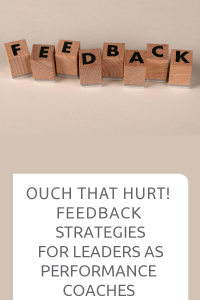
Nowack, K. & Mashihi (2025). Ouch that Hurt! Feedback Strategies for Leaders as Performance Coaches. Coaching Perspectives, Association for Coaching, pp. 50-52.
Mashihi, S. & Nowack, K. (2025). Feedback Without the Sting: How to Use Feedback for Team Success. Training Magazine, Whitepaper, April 2025.
Mashihi, S. & Nowack, K. (2025). Performance Feedback Strategies: Driving Successful Behavior Change. Association for Training and Development, ISBN-13 : 978-1957157863. Link
Nowack, K. & Mashihi, S. (2025). A Clearer Window into Performance. TD Magazine, March 2025.
Nowack, K. M. (2025). Stress, Resilience, and Burnout: Organizational and Individual Perspectives. Kenneth Nowack, Consulting Psychology Journal, ISBN: 978-1-4338-9821-1. Link
Nowack, K. M. (2024). The neuroscience of successful habit change for coaches: A one-night stand or a lasting relationship?. Association for Coaching, Coaching Perspectives, 40, 48-49.
Williams, J. & Nowack, K. M. (2022). Neuroscience Hacks to Enhance Learning Agility in Leaders. Consulting Psychology Journal, 74(3), 291–310. https://doi.org/10.1037/cpb0000231.
Nowack, K. (2022). Detach and Recover: Self-Care Strategies to Minimize Job Burnout. T&D, June 2022. Link
Nowack, K. (2021). From Nudge Theory to Budge. t-three Consulting Blog, July, 2021. Link
Nowack, K. M. and Niemirowski, A. (2021). Cognitive hardiness in coaching: Personality trait, skill, or outcome?. The Coaching Psychologist, Volume 17, No. 1, pp. 14-31.
Nowack, K. M. (2021). The power of detachment and recovery from work overload. Training Journal, May 19. Link
Nowack, K. M. (2021). Hacks for Effectively Setting and Reaching Goals. Training and Development Magazine, May 2021, pp. 72-74.
Nowack, K. & Zak, P. (2021). Sustain High Performance With Psychological Safety. TD at Work, Association for Training and Development, February 2021. Link
Nowack, K. M. & Zak, P. (2020). Bust Your Unconscious Biases—and Instantly Become a Better Leader. Talent Quarterly Magazine, December 2020. Link
Nowack, K. (2020). Who Are the Resilient?. t-three, September 2020. Link
Nowack, K. M. (2020). Building Resilience During COVID-19: Who Is the Hardy?. Training & Development, July, 2020. Link
Nowack, K. M. & Zak, P. (2020). Empathy Enhancing Antidotes for Interpersonally Toxic Leaders. Consulting Psychology Journal: Research and Practice, 72, 119-130 (APA Consulting Psychology Division--Elliott Jaques Best Paper Award for 2020).
Nowack, K. M. & Zak, P. (2020). In Team We Trust. Talent Quarterly Magazine, February 27, 2020. Link
Nowack, K. M. (2020). Are You Getting Enough Sleep. Training Journal Magazine, January 2020.
Nowack, K. M. & Munro, A. (2019). The Upside, Downside and Dark Side of Emotional and Social Competence. Training Journal Magazine, 25-27, July 2019.
Nowack, K. M. (2019). Before and After: Using the Post-Then Approach to Evaluation. Training & Development Magazine, 20-23, July 2019.
Nowack, K. M. & Munro, A (2019). Emotional and Social Competency: The Female Advantage. Training Journal Magazine, June 2019, 29-31.
Nowack, K. M. (2019). From insight to successful behavior change: The real impact of development-focused 360 feedback. A. H. Church, , D. W. Bracken, J. W. Fleenor, & D. S. Rose (Eds.), The Handbook of Strategic 360 Feedback, New York: Oxford University Press.. Link
Nowack, K. M. & Munro, A. (2019). Emotional and Social Competence: Old Wine in a New Bottle?. Training Journal Magazine, May 2019, 16-18.
José María De la Roca-Chiapas, Verónica Reyes-Pérez, Eduardo Huerta-Lépez, María G. Acosta-Gómez, Kenneth Nowack y Cecilia Colunga-Rodriguez (2019). Validación del Perfil de Estrés de Nowack en estudiantes universitarios mexicanos. La Revista de Salud Pública, 21 (2): 146-153.
Nowack, K. (2018). Neuro-mythconceptions in consulting psychology: Between a rock and a hard place. Consulting Psychology Journal: Practice and Research, 70, 1-10, doi.org/10.1037/cpb0000108.
Nowack, K. (2017). Facilitating Successful Behavior Change: Beyond Goal Setting to Goal Flourishing. Consulting Psychology Journal: Practice and Research, 70, 1-19. http://dx.doi.org/10.1037/cpb0000088. Link
Nowack, K. (2017). Sleep, Emotional Intelligence, and Interpersonal Effectiveness: Natural Bedfellows. Consulting Psychology Journal: Research and Practice, 69, 66-79.
Nowack, K. and Zak, P. (2017). Brain Trust. Talent Economy Magazine, 2, 28-33.
Nowack, K. (2017). Neuroleadership and Engagement (Part I). IE University (Madrid) Interview with Norman Kurtis, Vice Dean, Behavior & Human Development at IE University (8:49). Link
Nowack, K. (2017). Neuroleadership and Engagement (Part II): Happiness in Organizations. IE University (Madrid) Interview with Norman Kurtis, Vice Dean, Behavior & Human Development at IE University (9:44). Link
Nowack, K. M. & Deal, J. J. (2017). Tired of Being Fatigued?. Consulting Psychology Journal: Research and Practice, 69, 63-65.
José Antonio Carazo (2016). “la felicidad es considerada un factor de bienestar, pero es un concepto muy subjetivo”. Capital Humano, No 315, 86-90.
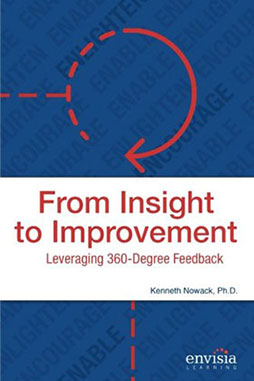
Nowack, K. (2016). From Insight to Improvement: Leveraging 360-Degree Feedback. Envisia. Link
Nowack, K. (2016). How Sleep Affects Performance — And What Companies Can Do. Talent Executive Magazine, . Link
Nowack, K. M. (2016). Toxic Bosses May Cause Health Risk. Talent Management Magazine, 12, pp.26-29, 56.
José María De la Roca-Chiapas et al. (2016). Impact of stress and levels of corticosterone on the development of breast cancer in rats. Psychology Research and Behavior Management, Volume 9, 1-6.
Nowack, K. M. (2015). The Limits of Deliberate Practice. Talent Management Magazine, 11, 22-25.
Nowack, K. M. (2015). 360 Feedback: From Insight to Improvement. The Public Manager, 20-23, Summer 2015.
Nowack, K. M. (2015). Urban Talent Myths Exposed. Talent Management Magazine, Volume 11, pp. 35-37, 47.
Nowack, K. M. (2015). Do Men and Women Lead Differently?. Talent Management Magazine, Volume 11, pp. 26-28.
Nowack, K. (2014). Leveraging Multi-rater Feedback for Successful Behaviour Change . (Ed.), Dutton, J., Talent Management: Our Expert Views, pp.23-34.
Nowack, K. (2014). Taking the Sting Out of Feedback. Talent Development Magazine, Volume 68, pp. 50-54.
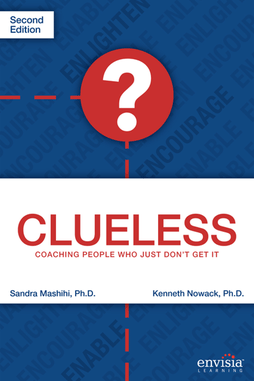
Mashihi, S. & Nowack, K. (2013). Clueless: Coaching People Who Just Don't Get It (2nd Edition). Envisia Learning, Inc.. Link
Nowack, K. (2013). Development and Interpretation of the Manager View 360. Jean Brittain Leslie, Feedback to Managers: A Guide to Reviewing and Selecting Multirater Instruments for Leadership Development, 4th Edition, Center for Creative Leadership, pp. 377-387.
Nowack, K. (2013). Development and Interpretation of the Emotional Intelligence View 360. Jean Brittain Leslie, Feedback to Managers: A Guide to Reviewing and Selecting Multirater Instruments for Leadership Development, 4th Edition, Center for Creative Leadership, pp. 172-184.
Giesser, B., Coleman, L., Fisher, S. Guttry,M., Herlihy, E., Nonoguchi, S., Nowack, D., Roberts, C, & Nowack, K. (2013). Living Well With Multiple Sclerosis: Comparisons of a 12-Week Blended Learning, Classroom-Based and Online Programs September 2013. National Multiple Sclerosis Society Southern California and Nevada Chapter.
Balding, R. & Nowack, K. (2013). Relationship between Smartphone use in the Workplace and Personal use on Perceived Stress. Poster Presented at the American Psychological Association Work, Stress and Health 2013 Conference Los Angeles, CA, .
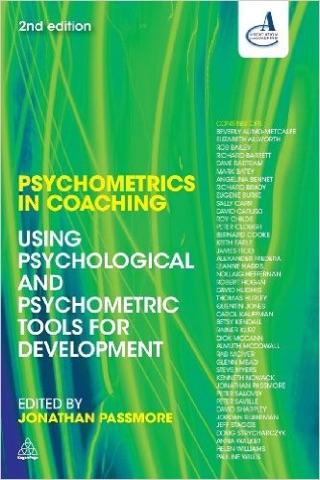
Nowack, K. (2013). Coaching for Stress: StressScan. Jonathan Passmore, Psychometrics in Coaching, Association for Coaching, UK, pp. 305-324.
Schoen, M. & Nowack, K. (2013). Reconditioning the Stress Response Reduces the Inflammatory Cytokine IL-6 and influences resilience: A Pilot Study. Complementary Therapies in Clinical Practice, 19, 83-88. doi: 10.1016/j.ctcp.2012.12.004.
Edelson, H. (2012). Do 360 Evaluations Work?. APA Monitor on Psychology, Vol. 43, 58-60. Link
Nowack, K. & Mashihi, S. (2012). Evidence Based Answers to 15 Questions about Leveraging 360-Degree Feedback. Consulting Psychology Journal: Practice and Research, Vol. 64, No. 3, 157–182 (APA Consulting Psychology Division--Elliott Jaques Best Paper Award for 2012).
Nowack, K. (2012). Emotional Intelligence: Defining and Understanding the Fad. Training and Development, Volume 66, pp. 60-63.
B.J. Gallagher (2011). America's Working Women: Stress, Health and Well-Being. Huffington Post, . Link
Ima Sims (2009). Unmal jefe puedellegar a matarde estres a sus empleados. La Contra de La Vanguardia, Interview by Ima Sanchis following the Life09 I Congerso Internacional de Liderazgo Femenino, 16, 17 y 18 de Septiembre, Barcelona, Spain (Espanol).
N.D. (2009). Social Stress: Bem−me−quer, mal−me−quer?. Vida Saudavel, The article appeared in Vida Saudavel magazine in January 2009 based on an interview and lecture with Dr. Kenneth Nowack about his stress research and validation of the wellness and health assessment called StressScan (Portuguese).
Nowack, K. (2009). Personal Success Scorecard. Personal Excellence, Volume 12, No. 12.
Nowack, K. (2009). Leveraging Multirater Feedback to Facilitate Successful Behavioral Change. Consulting Psychology Journal: Practice and Research, 61, 280-297.
Agatha Gilmore (2008). Lifestyle Learning: Improve the Bottom Line with Behavioral Education. Chief Learning Officer, pp. 22-27, Interview with Chief Research Officer Kenneth Nowack, Ph.D..
Nowack, K. (2008). Los jefes son una de las principales causas de estres laboral. Aedipe Catalunya, (Spanish) pp.20-22.
Nowack, K. (2008). StressScan: Coaching at Work. Coaching at Work, Chartered Institute of Personnel and Development (CPID), Volume 6, pp. 48-49.
Nowack, K. (2007). It's Not How Smart You Are But How You Are Smart. Talent Management, 3 (10) p. 10.
Nowack, K. (2007). Lifestyle Coaching as a Strategic Talent Management Tool. Talent Management, 3 (7), 36-37.
Nowack, K. (2007). Strategic Talent Management Through Career Paths. Talent Management Magazine, Volume 3 (4), p. 16.
Nowack, K. (2007). Using Wellness Coaching as a Talent Management Tool. Selection & Development Review, Volume 23, No. 5, pp. 8-11.
Nowack, K. (2007). Who is the Resilient Talent, and How Do You Develop It? . Talent Management, 3 (6) p. 12.
Nowack, K. (2007). Why 360-Degree Feedback Doesn't Work. Talent Management, 3 (8), p. 12.
Nowack. K. (2007). Using Assessments in Talent Coaching. Talent Management, Volume 3, 12, p.16.
Giesser, B., Coleman, L., Fisher, S., Guttry, M., Herlihy, E., Nonoguch, S., Nowack, D., Roberts, C. & Nowack, K. (2007). Living Well with Multiple Sclerosis: Lessons Learned from a 12-Week Community Based Quality of Life Program. Paper presented at 17th Annual Art & Science of Health Promotion Conference, March, 2007, San Francisco, CA.
Nowack, K. (2006). Emotional intelligence: Leaders Make a Difference. HR Trends, 17, 40-42.
Nowack, K. (2006). La movilidad laboral, un rasgo de la sociedad actual. El Global, Los tiempos cambian y con ellos evoluciona la sociedad. Si hace anos primaba la estabilidad en el puesto de trabajo, ahora la tendencia apunta a la sustitucion de la estabilidad laboral por la seguridad en la contratacion. Esa es la idea principal en torno a la que ha girado la conferencia "Inteligencia emocional y estres en la vida laboral y personal" impartida por el asesor de recursos humanos Kenneth Nowack (Spanish).
Nowack, K. (2006). Optimising Employee Resilience: Coaching to Help Individuals Modify Lifestyle. Stress News, International Journal of Stress Management, Volume 18, 9-12.
Nowack, K. and Roberts, C. (2006). Chronic Illness and Spirituality: What Do You Believe?. American Group Psychotherapy Association National Conference, San Francisco, February 2006.
Nowack, K. (2005). Leadership, Emotional Intelligence and Employee Engagement: Creating a Psychologically Healthy Workplace. Unpublished Manuscript. Envisia Learning, Inc..
Nowack, K. (2005). Longitudinal evaluation of a 360 degree feedback program: Implications for best practices. Paper presented at the 20th Annual Conference of the Society for Industrial and Organizational Psychology, Los Angeles, March 2005.
Giesser, B., Coleman, L., Fisher, S. Guttry,M., Herlihy, E., Nonoguchi, S., Nowack, D., Roberts, C, & Nowack, K. (2005). Living Well: Facilitating Positive Health Habits in Persons With Multiple Sclerosis. Archives of Physical Medicine and Rehabilitation, 86 (10), e8.
Nowack, K. and Heller, B. (2001). Making Executive Coaching Work: The Importance of Emotional Intelligence. Training Magazine, trainingmag.com.
Nowack, K. (2000). Individual stress management: Effective or not?. In P. Schnall, K. Belkie, P. Landensbergis, & D. Baker (Eds.), Occupational Medicine: State of the Art Reviews, Hanley and Belfus, Inc., Philadelphia, PA., Vol 15, No. 1, pp. 231-233 .
Nowack, K., Hartley, J. and Bradley, W. (1999). Evaluating results of your 360-degree feedback intervention. Training and Development, 53, 48-53.
Nowack, K. (1999). 360 Degree feedback. In DG Langdon, KS Whiteside, & MM McKenna (Eds.), Intervention: 50 Performance Technology Tools, San Francisco, Jossey-Bass, Inc., pp.34-46.
Nowack, K. (1999). Evaluating Multi-Rater Feedback Programs at the Los Angeles Times. R. Stadius (ed.), ASTD Trainer's Toolkit: More Evaluation Instruments, American Society for Training and Development, Alexandria, VA.
Nowack, K. (1998). Approaches to Validating Assessment Centers. Performance and Instruction, Volume 27, 14-16.
Wimer, S. and Nowack, K. (1998). Thirteen common mistakes in implementing multi-rater feedback systems. Training and Development, 52, 69-80.
Wimer, S. & Nowack, K. (1998). How to Benefit from 360 Degree Feedback. Executive Excellence, .
Nowack, K. & Wimer, S (1997). Coaching for Human Performance. Training & Development, 28-32.
Nowack, K. (1997). Congruence Between Self and Other Ratings and Assessment Center Performance. Journal of Social Behavior and Personality, Volume 12, 145-166.
Greene, R. and Nowack, K. (1995). Hassles, hardiness and absenteeism: Results of a 3-year longitudinal study. Work and Stress, 9, 448-462.
Nowack, K. (1994). Psychosocial Predictors of Health and Absenteeism: Results of Two Prospective Studies. Paper presented at the American Psychological Association Annual Convention, September 1994, Los Angeles, CA.
Nowack, K. (1994). The secrets of succession: Emphasizing development in succession planning systems. Training and Development, 48, 49-54.
Nowack, K. and Pentkowski, A. (1994). Lifestyle habits, substance use, and predictors of job burnout in professional working women. Work and Stress, 8, 19-35.
Nowack, K. (1993). 360 Degree feedback: The whole story. Training & Development Journal, 47, 69-72.
Nowack, K. (1993). Assessment Center Performance and Basic Skills. Paper Presented at the Eight Annual Conference of the Society for Industrial and Organizational Psychology, San Francisco, CA, April 1993.
Schwartz, G.E., Schwartz, J.I., Nowack, K.M., & Eichling, P.S. (1993). The hardiness and the negative affectivity confound as a function of a defensive coping style. University of Arizona and Canyon Ranch. Unpublished Manuscript. Tucson: Arizona, Canyon Ranch.
Nowack, K. (1992). Self-assessment and rater-assessment as a dimension of management development. Human Resources Development Quarterly, 3, 141-155.
Schwartz, G.E., Schwartz, J.I., Nowack, K.M., & Eichling, P.S. (1992). Changes in perceived stress and social support over time are related to changes in immune function. University of Arizona and Canyon Ranch. Unpublished Manuscript. Tucson: Arizona, Canyon Ranch.
Nowack, K. M. (1991). A Quantitative Approach to Training Needs Analysis. Training and Development Journal, Volume 45, 69-73.
Nowack, K. M. (1991). Psychosocial predictors of physical health status. Work and Stress, 5, 117-131.
Nowack, K. (1990). Getting Them Out and Getting Them Back. Training and Development, Volume 44, 82-85.
Nowack, K. M. (1990). Initial development of an inventory to assess stress and health risk. American Journal of Health Promotion, 4, 173-180.
Nowack, K. M. (1989). Coping style, cognitive hardiness, & health status. Journal of Behavioral Medicine, 12, 145-158.
Nowack, K (1988). Approaches to validating assessment centers. Performance & Instruction, 27, 14-16.
Nowack, K. (1988). The Stress Resistant Employee: An Update. Paper presented at the 68th Annual Meeting of the Western Psychological Association, Burlingame, CA, April 28-May 1, 1988.
Nowack, K. M. (1987). Health Habits, Type A Behaviour and Job Burnout. Work and Stress, Vol. 1 No. 2, 135-142.
Nowack, K. (1987). Training Needs Assessment and Organizational Climate Survey. ASTD Trainer's Toolkit: More Evaluation Instruments, American Society for Training and Development, Alexandria, VA, pp. 111-131.
Nowack, K. M. (1986). Type A, hardiness, and psychological distress. Journal of Behavioral Medicine, (9), 537–548.
Nowack, K. (1986). Pre-post-then evaluation of a behavioral modeling approach to supervisory skills training. Performance & Instruction, 25, 14-16 .
Nowack, K. (1986). Who Are the Hardy?. American Society of Training and Development, Volume 40, 116-118.
Nowack, K. M. (1985). Factors Affecting Burnout and Job Performance of Resident Assistants. Journal of College Student Personnnel, 26, 137-142.
Nowack, K. & Hanson, A. (1985). Academic Achievement of Freshmen as a Function of Residence Hall Housing. NASPA Journal, 22, 22-28.
Nowack, K (1985). Type A Behavior, Family Health History and Psychological Distress. Psychological Reports, 57, 799-806.
Nowack, K. M. & Hanson, A. L. (1983). The Relationship Between Stress, Job Performance and Burnout in College Student Resident Assistants. Journal of College Student Personnel, 24, 545-550.
Nowack, K. (1980). Coronary Prone Behavior, Locus of Control and Anxiety. Psychological Reports, 47, 359-364.
Interested in our research?
Get in touch to learn more about our evidence-based approach to leadership development.
Get in Touch